Showing posts with label Jason Schwartzman. Show all posts

Tuesday, August 26, 2014

WES ANDERSON ROUNDTABLE: THE FANTASTIC MR. FOX


Every now and then at Screen Vistas I like to team up with Max O’Connell over at The Film Temple to tackle the work of one of our favorite directors. This time we’re looking at comedy stylist/master of whimsy Wes Anderson.

Loren Greenblatt: At the time, Life Aquatic and Darjeeling Limited left some people feeling that Wes Anderson was getting too caught up in his style.  He did little to assuage those anxieties with his follow up:  a stop-motion film, a form that, quite literally, gives him control over every hair of his mise-en sene.

Max O’Connell: Some already thought his films were cartoons – A.O. Scott seemed to dance around that idea in his The Royal Tenenbaums review, whereas those arguments become more common around The Darjeeling Limited. So, he did what anyone might do to counteract those arguments: he made a literal cartoon! And yet it’s become one of his most embraced films, well reviewed even if it didn’t do well at the box office, and a lot of people saw it as a return to form after Darjeeling and Life Aquatic split a lot of people.

LG: What else is interesting about the film is that Anderson doubles down on the storybook aspect. Like many Anderson films, it starts out with a book (the original Roald Dahl book), with an illustration of Mr. Fox, or “Foxy,” (Clooney) only to cut into a glorious sunset as Foxy listens to “Davey Crockett,” a spectacular myth-making song. Yeah, we’re in a fable all right!

MO: And part of what makes it such a wonderful fable is that it’s dealing with an antiquated style. 2D animation is becoming less popular as 3D animation boomed, and stop-motion has been almost completely phased out. Not too many people other than Laika and Tim Burton still do it. Which is a shame because it fits people like Wes perfectly, because while it’s not as fluid as, say, Up, that’s kind of the point. It has this wonderful warmth, this handmade quality. It looks like something out of a storybook.

LG: They animated the frames a little slower than they normally would have so we see the seams, too. There’s a sense of the thingness of things: you can clearly see that all of the smoke, for example, is made of little cotton balls and it’s adorable! And he’s adapting his overtly whimsical style that he used for adult stories to carry over to children’s films, which he’ll do again in Moonrise Kingdom.

LG: I think while there’s still some darkness and edge to both films, but it’s no secret that he’s let up on tone a lot here, this is by far his lightest film.

MO: Part of why it’s so wonderful is that it does maintain a bit of an edge, which is important. It’s something both Anderson and Dahl understood: children’s movies without any real conflict or sense of danger are really dull. Here, we get some of the Dahl macabre jokes. Fox gets his tail shot off, and it’s worn as a necktie by the main villain, Bean (Michael Gambon).

LG: And the hero actually kills someone, a rat played by Willem Dafoe. There’s not a lot of modern kids movies that have a death scene at this point, the kind of old-fashioned fairytale thing that a lot of recent kids movies have moved away from.

Anderson also lifts from film history. One of the big influences that struck me on this viewing is Raising Arizona. H.I. McDonagh and Foxy are both characters who give up a life of crime so they can raise a family, only to regress for their own reasons. Their animal instincts or criminal natures are still there, and both films are about putting those impulses behind you for the sake of growing up.

MO: I can see it. I’d also connect the film to traditions by Dahl, though, where family life is never ideal. In Charlie and the Chocolate Factory, they’re all good people, but they struggle in poverty. In Matilda, it’s an unloving home. In Fox, the father’s kind of a cad (as George Clooney characters tend to be), and he’s a classic Wes Anderson bad dad. He’s not Royal Tenenbaum, but he’s not always the best father to Ash (Jason Schwartzman).

LG: He likes to give people false options to validate himself. From the first scene, he’s constantly intimidating people into going his way as a way to make them like him. It doesn’t always work.

MO: In Wes Anderson’s films, characters try to have an impossible level of control over their lives. Fox does that in an interesting way by trying to inject more spontaneity in his life rather than letting himself be controlled. He’s a wild animal, and he doesn’t want to give up that. He doesn’t want to be stuck in the doldrums, he wants to “steal squabs on the side.”

LG: He positions himself in ways where he’s almost trying to get into trouble, trying to inject spontaneity into his life where it might mess him up, and that kind of fits with what Wes is trying to do with animation and with his own style. There’s a sense of spontaneity here that’s rare in animation and I think it has a lot to do with the way the dialogue was recorded. In most animated films, actors record their dialogue separately in closed off sound booths, which is no way to act. Anderson was novel, recording his actors together, in physical locations mirroring those in the film. There’s a trade off sometimes in the technical quality of the recordings, but at the same time the technique adds life to the performances that might not be there otherwise.

MO: Yeah, the cast is wonderful. I’ve been on the record as being a semi-contrarian on Streep, in the sense that I think she’s frequently praised for performances that are well below par for her (*cough*Doubt*cough cough*The Iron Lady). Here’s a performance that’s actually underrated: she’s as warm and empathetic here in a way that she doesn’t always get to be, a companion character to Anjelica Huston’s mother figure in The Royal Tenenbaums.

LG: It helps that she’s picking better material and working with a great director for a change, instead of the auteur of Mamma Mia! 

MO: But while we’re talking about that new spontaneity, we shouldn’t undervalue how his films always the offbeat little character bits that stand out amidst the tight control over everything. What’s one of your favorite bits of side-whimsy here? Mine’s “Petey’s Song,” that wonderful Jarvis Cocker, playing the villain’s assistant, Petey, makes up a song that brings us up to speed but uses made-up words that displease the villain.

LG: “You can’t just make up words! That’s bad songwriting! Bad job, Petey!” The look on Petey’s face makes me feel that that this putdown is almost as big an act of villainy as Bean shooting off Foxy’s tail.

MO: Him making up a song on the fly infuriates a villain who’s one of Wes’s classic control freaks. Or maybe I’d go with the choice to have the characters say “cuss” instead of cursing, which hits its peak in that great little scene where Foxy and Badger (Bill Murray), his accountant, getting into a loud, wild animal argument.

LG: Yeah, there’s an interesting tension there, where they’re both anthropomorphized and animalistic at the same time. For me, I love Whack-Bat, with the ridiculously complex rules that remind me of Fizzbin from Star Trek. There’s this whole thing where Ash really wants to be the best Whack-Bat player like his dad, but he’s not an athlete. He’s trying to be his dad in a lot of ways, the mischief side especially, but he can’t really live up to it, so he’s inevitably going to go through sulky teenager phases. That’s only made worse by the arrival by his cousin Kristofferson (Eric Anderson, Wes’s brother), who’s very athletic and gains Foxy’s approval over his own son.

MO: This movie, like no Wes Anderson movie since Rushmore recognizes that kids can be cruel, too. It’s telling that Ash is played by Max Fischer himself. He doesn’t treat his cousin very well. Kristofferson is almost impossibly unassuming, even with all of his talent. He’s just a nice, calm kid trying to make the best of a situation where his father is deathly ill and he has to live with a bunch of relatives that he’s never met. Foxy takes to him right away, but Ash is needlessly cruel to him.

LG: We understand where that frustration comes: he’s jealous because of how his father takes to Kristofferson. But he can be cruel, yes. There’s a nice moment where Kristofferson wants to sleep in a less cramped position than under Ash’s bed, and Ash refuses. Kristofferson starts to cry, and Ash reluctantly realizes he’s being a dick and turns on his train set. There’s a moment of brief connection before more rivalry.

MO: “More rivalry” emphasized. He’s still awful to Kristofferson, even after he stands up for Ash when he’s being bullied.

LG: Every kid goes through a period where they’re dicks. It doesn’t help that he’s seen as “different.” It’s never mentioned that he’s dressed as a superhero with a little white cape and bandit hat. He’s that kid who’s a super-nerd and doesn’t understand why people don’t like him.

MO: He’s a strange little guy who’s trying to blend in and be something he’s not, much like Max Fischer. He wants to be an athlete and push down everything that’s unique about him, just like Max wanted to hide his working class roots.

LG: Though I’d stress that the pain isn’t as deeply felt here as it is in Anderson’s previous films, or even in another great children’s film from that year, Where the Wild Things Are, which has a similar theme running through it (and which we both love far more than the rest of the world).

MO: It makes sense that it is lighter, because he is making a children’s film. My minor complaints on this front is less that he’s treading lightly and more that there are times where I feel he spells something out a bit too much for kids or parents, as if he’s trusting them less. There’s a moment where Foxy says aloud to Felicity, “I need everyone to feel I’m the greatest.” We know his problems. We don’t need it restated. More notably is right after the rat, in his dying breath, gives them some information to help find Kristofferson, they say aloud something to the effect of, “He redeemed himself.” It’s already demonstrated beautifully in the scene before, so we don’t really need to be told, and I don’t think the kids need to be told either. Kids are smart. They’ll get it.

LG: Yeah, though I do love the line about him being “just another rat found in a garbage pail behind a Chinese restaurant.” It was a problem in The Darjeeling Limited too, what with the “you’ve still got some healing left” moment.

MO: Yeah, clonk. These aren’t as bad as that, they’re minor things.

LG: I can see Anderson and co-screenwriter Noah Baumbach feeling out to what degree they can be themselves in this film in certain scenes, but at its best it’s wonderfully idiosyncratic in the best Wes Anderson-y way. In the opening scene, Felicity and Foxy break the chicken roost in a large simulated tracking shot set to “Heroes and Villains.” That’s just such a joyful moment.

MO: It is. We talk about Anderson’s great use of music in all of his films, and this is no exception. You mentioned “Heroes and Villains,” I’ll mention the other Beach Boys song used, their version of “Old Man River,” which is so gentle compared to the more raucous song they use earlier.

LG: The only bit of music that doesn’t quite work for me is the use of “Street Fighting Man.” It’s in a great sequence, but I don’t think the song quite fits.

MO: I’m on the edge for that one as well, maybe just because I want him to use another left-of-center choice like “I Am Waiting” or “She Smiled Sweetly” or “Play With Fire” instead of a big hit. But I agree, thematically it doesn’t fit.

LG: Then again, I don’t know how “Heroes and Villains” fits thematically, but it’s perfect for the feeling. It’s his first film with Alexandre Desplat doing the score, as well, which gives it a wonderful rustic feel that separates it from his Mark Mothersbaugh collaborations.

MO: Desplat does his best work with Anderson. It’s not just a wonderful, whimsical nursery rhyme thing to it, but it also reminds me of the kind of stuff that Georges Delarue would have done for Truffaut in the 60s and 70s (Wes does use a Delarue song at a key point in the film), a bit like the jaunty score for “A Gorgeous Kid Like Me,” which Baumbach later used himself in Frances Ha.

LG: They both have this warm, loving, inviting style, which is something I love about what Anderson takes from Truffaut. They both love playing with film history in a warm, affectionate way, rather than the playful but cold way Godard does.

MO: Some of the references are a real delight. There’s a scene where Boggis, Bunch and Bean meet up and Bean is framed in the dark almost like Vito Corleone, plotting the death of another man (er, animal). And Bean’s freak out tearing apart a room is a nice, funny reference to Citizen Kane, where he’s reimaging a life-crushing moment from that film as a petty moment in Bean’s life.

LG: That scene in the dark reminded me of Once Upon a Time in the West where Harmonica’s waiting out in the dark, being shot at.

MO: That’s an interesting comparison, too, because there are more overt Leone throwbacks, as in some of the eye-framing standoff moments. It’s a much smaller scaled film, but he’s trying to give it that same kind of epic conflict. There’s also the bit of the score where Foxy confronts a wolf and the score plays like Ennio Morricone. Though, honestly, I never really got why that scene was there.

LG: Well, it’s his pure animal nature physically embodied. It’s completely without borders. It’s dangerous. It goes back to the Raising Arizona comparison I made, with the wolf in the place of the biker. It’s also a bit of a Jeremiah Johnson reference, where Redford sees his opposite in the distance and they acknowledge the power they have over each other before passing.

MO: That makes a bit more sense, though I still wish they played with it a bit more. Then again, I complained about him being too on-the-nose earlier, so maybe I just don’t know what the hell I’m looking for.

LG: I really love the ending of the film. You complained that the action sequences in The Life Aquatic with Steve Zissou were clumsy, but he does a pretty wonderful job here. It helps that he can control everything in the frame. The go-for-broke rescue scene is wonderful. They have to race through town, hiding behind crates as they’re being shot at, and Anderson really uses the stillness of stop-motion to his advantage to emphasize motion. The ending, though, after they’ve lost everything, they find a way to live outside of their nature and find a way to survive by taking from this supermarket. They’ve found a civilized world to be a part of, even if the lighting is fluorescent and awful and the linoleum floor doesn’t feel great on their feet, but they have each other to get through it. Of all the Wes Anderson films, this film more than any other stresses community.

MO: I wouldn’t say more than any other, since Moonrise Kingdom expands upon that, but it does more than any other Anderson film before it. We have all of these wonderful side characters (Murray’s Badger, Wally Wolodarsky’s spiral-eyed opossum Kylie) that Fox constantly talks over. There are two important toasts in the film: in the first, Fox interrupts Badger’s toast and makes it about himself. In the second, it’s more about everyone. It’s about sticking together and surviving, about creating a giant family and being about more than just yourself. It’s another cautiously optimistic ending, as it was in Rushmore, because it’s not going to be easy for them, but they can get through it together.

LG: Everything that happens is Fox’s fault, and it’s about him learning to get over his own selfishness. We love Clooney, as he’s a wonderful rascal, but watching him grow is all the more satisfying. And then we get that last song, Bobby Fuller Four’s “Let Her Dance.” It’s a song about infidelity and breakup, but it’s such an upbeat song. It’s like “Ooh La La” in Rushmore. There’s a sly attention to a mix between happiness and sadness that makes the ending work.

Loren’s Grade: B+

Max’s Grade: A-

That concludes our discussion of Fantastic Mr. Fox if you agreed or disagreed, feel free to leave a comment below. You can also follow Screen Vistas on Facebook by clicking here.

Roundtable Directory:  
Bottle Rocket (short and feature)
Rushmore
The Royal Tenenbaums
The Life Aquatic with Steve Zissiou
Hotel
Chevalier / Darjeeling Limited
The Fantastic Mr. Fox

Moonrise Kingdom
Shorts and Commercials
The Grand Budapest Hotel


Saturday, July 19, 2014

WES ANDERSON ROUNDTABLE: THE DARJEELING LIMITED

Every now and then at Screen Vistas I like to team up with Max O’Connell over at The Film Temple to tackle the work of one of our favorite directors. This time we’re looking at comedy stylist/master of whimsy Wes Anderson.

Loren Greenblatt: Wes Anderson’s fifth film is a bit of an odd duck. It’s actually two films, a short film and then a full feature which he made later. The short, Hotel Chevalier finds Jason Schwartzman, for the first time in an Anderson film since Rushmore, pulling a geographic. He’s a perturbed man who’s run away from his problems in a French hotel. He learns that an old flame played by Natalie Portman has tracked him down and is coming to see him. There’s a nice little stretch where he sets about making the room up, sprucing himself up, finding exactly which song he’s going to play (“Where to You Go To My Lovely by Peter Sarstedt) in anticipation of what he hopes will be a romantic event.

Max O'Connell: Yeah. It’s pretty extraordinary that we don’t know the full details of their relationship, but we can tell by the intonation in Schwartzman’s voice and in his body language that this is someone very important to him who’s hurt him. He’s trying to do whatever he can to get things in order and keep his life together, but when we see him for the first time, he’s retreated from the world. He’s in this nice warm place where everything is bright yellow, and he’s wearing a bright yellow robe. He’s watching Stalag 17 on TV. And when she calls, that shield from the rest of the world comes tumbling down. It becomes the kind of melancholy we’ve seen from Anderson before, but much older and deeper.

LG: There’s this really nice moment where they open the door, and they come into an embrace. Schwartzman goes in for the kiss, but Portman goes for his shoulder, immediately drawing of the lines of how they feel. They don’t really dwell on this moment, so it’s one of those quick little things. It is an older melancholy, and less whimsical film than we’ve seen from Anderson. The film is sort of about that song. A lot of the film takes place with the song playing seemingly in its entirety under the dialogue. The song is about this man who’s pining for a lost woman, and he knows all these great details about her but can’t quite get inside her head. The film is almost a music video, or as close as Wes Anderson has ever gotten.


MO: In part because it is so much shorter, and it does feature the song very heavily. So much of it is so wonderfully choreographed to that song, particularly near the end after they’ve decided to have sex, and you can tell they have a lot of feelings for each other, but it’s leftover affection for something that’s clearly not working and has not worked out. We don’t know the full details of her character – she has bruises, but he’s surprised to see them, and they haven’t been together for a while – so it’s a kind of thing that she’s equally damaged if more enigmatic. The way Anderson frames them, for the most part, it’s in a long shot to imply the emotional distance between the two or a tight close up. I love the intimacy when they finally embrace, start kissing, and he starts undressing her. They’re so close together, but so far apart because they know this is the end of it, because he doesn’t want to see her again after this.

LG: Yeah, and he’ll double back on this in the feature film, but it’s not looking great. She tries to repair their friendship, but he’s not going for it. He flat-out says that he doesn’t care she didn’t mean to hurt him, that he never wants to be her friend, and that he’s OK with her feeling like shit if they fuck. There’s a sense of finality at this point.

MO: And of bitterness. It’s not self-pity, necessarily, but it’s something we could understand. It’s a wallop of a short, and it ends beautifully. It’s so confident that a lot of people felt that the feature paled a bit in comparison.

LG: To some degree, I think that. We should talk about how this connects to The Darjeeling Limited. Wes Anderson at the time was wishy-washy on whether or not he wanted this to be a part of the film or not. He shot it earlier, didn’t have a script for Darjeeling so much as an outline. Initially it was not attached to the film theatrically. On limited release, it was left out and released on iTunes. On wide release, it was attached.

MO: Which is how I saw it.

LG: So there’s a question of whether or not it’s part of the film. It’s billed as “Part I of The Darjeeling Limited” in the credits, but how should it be consumed? It’s still not definitively answered. For this rewatch, I saw Darjeeling first to try to take them as separate films. I could definitely understand seeing them together, but they’re also separated by style. Hotel is very much a summation of the Wes Anderson style to this point, where Darjeeling departs from it in very important ways.

MO: Yes it does!


LG: The opening of Darjeeling is done in media res, which is unusual for Anderson, who’s given to gentler, storybook introductions. We open on an unnamed businessman played by Bill Murray trying to make a train in India. The cab is rushing, there a lot of chaotic whip pans and handheld shots. Murray makes it to the station as the train is pulling out, and he chases after it. We get this gorgeous slow motion tracking shot set to The Kinks’ “This Time Tomorrow.” And there’s a much younger man, Peter (Adrien Brody), who overtakes him and makes the train as he’s left behind. I don’t see the film as one of his best, but the opening is so masterful and full of subtext and symbolism that I wonder why the rest falls so short for me and a lot of people.

MO: It’s an interesting question, though I’d like to double back a bit. You said it’s not totally resolved on how that short connects to the film. We’re split on this. You’re torn, I think as soon as he did end up continuing the story (the short’s events are mentioned in the film, and Schwartzman’s character is one of the film’s protagonists alongside Brody and Owen Wilson). For me it’s a definitive part of the film. The difference in style is important because Darjeeling was at a point where people started knocking Anderson not stepping outside of his aesthetic (which is a stupid criticism, but whatever). Hotel Chevalier sees him doubling down on that style for a character who’s receding into it. The feature is still recognizably Anderson, but it is a bit of a departure (ironically, people still complained that it was too Wes-y), because it’s about trying to get into something new. The in media res opening, which I see as a whimsical homage to The French Connection, is about trying to break away from that. It’s very purposeful.

LG: It’s not that Anderson has completely left whimsy and storybook trappings aside. That opening is very storybook but in a different way, but it’s not as booklike. This is the first film he’s done since Bottle Rocket without some sort of chapter heading or curtain raise at the start of every new section. His bright color pallet is still there, but he utilizes shallow focus and long lenses to much greater extent and he moves the camera in new ways. He’s very much taking for a new set of influences. He acknowledges Satyajit Ray and Jean Renoir’s film The River. There is a sense of stylistic exploration. I just wish it happened to more interesting characters.

MO: We’re going to disagree about how interesting they are, but let’s get into the style. It’s interesting how he’s sort of trying to have a lighter touch and mix the poetic realism of Renoir and Ray with his usual aesthetic. It’s still very colorful, and he does something with music that he had only hinted at before. Michael Powell had a theory of the “composed film,” where every element, from the designs to the actors to the music moving together and going together in a sort of synchronicity. Anderson played with that in the past, but it’s a lot more obvious here, particularly whenever he choreographs characters to music in slow motion to the Kinks with “Strangers” or “This Time Tomorrow” or “Powerman,” and I also think of the use of an underrated Stones song, “Play with Fire.” He’s choreographing to music pretty much the entire time, even if it’s just background music of Satyajit Ray’s films.

LG: His use of music has always been strong, but he does use it a little differently here. He let’s a lot of the pieces, particularly the non-English ones, play more atmospherically than in the past.

MO: Like the use of the Debussy piece when they’re around the fire.

LG: Or the stuff on the trains. It’s a huge stylistic choice, but it’s allowed to be more in the background than in the past. There’s a confidence to that.

MO: Something else that’s interesting: on the train, he’s using anamorphic framing for much tighter spaces. No matter how they try, these characters can’t really get away from each other. It’s a nice metaphor for how the family binds them together.

LG: We should actually talk about the plot. Jack (Schwartzman), Peter (Brody), and Francis (Wilson) are brothers, with Francis as a bit of an older, more damaged version of Wilson’s Bottle Rocket character, Dignan. These guys have been estranged for some time, and Francis has made a plan to get them back together in India, and they’re going on a spiritual journey because that’s what White people think you do in India. Francis has this very planned out with lists and itineraries, which are all laminated, and has a secret plan to bring his brothers to this place where their estranged mother (Anjelica Huston) is working as a missionary. But I don’t think these characters are as interesting. They have nice moments: I like that immediately as they arrive on the train, they bond by comparing the various illegal painkillers they’re on. But I thought a lot about The Royal Tenenbaums, which also has an estranged family trying to figure out if they want to be a family again. That film showed us what forced this fissure. Here, Anderson and his co-screenwriters Jason Schwartzman and Roman Coppola skip over that for the sake of narrative efficiency, but they end up doubling back, and a lot of the first half of the film feels like exposition to me in a very irritating way.

MO: You’re going to have to elaborate on that, because I don’t understand that criticism at all.

LG: There are all these running gags that inform us how they related to each other over the years. There’s a scene where one brother confesses a secret to a brother and asks for secrecy, and he’s immediately ratted out to the third brother. They do this seemingly endlessly and it got old for me pretty quick. Their bickering becomes more trying than interesting. These characters become more poignant by the end with the help of some really good filmmaking, but I think it’s the thinnest script he’s ever done and don’t find any of them compelling in the first half.

MO: They are to me. Part of it is me seeing them as all being connected to previous Wes Anderson characters with the wind knocked out of them by life: you mentioned Francis as being connected to Dignan, I see Jack as a sadder, more mature Max Fischer who’s retreated from the world –

LG: But Max Fischer has passions and interests. I don’t think Jack is that into being a writer. I think Owen Wilson has some sort of an education job, but it’s not explicitly mentioned…I don’t know who these people are outside of bickering.

MO: Huh. You don’t think Schwartzman is into writing? I don’t get that.

LG: He’s a writer who’s fallen back to just transcribing his life. That’s actually one of the gags I like. Every time he shares a story with his brothers, they’ll comment on how they like how they like that their characters did this or that, and Schwartzman will insist that the characters are all fictional.

MO: It’s not about falling back. It’s about how our art, however much we insist it doesn’t, reflects what we’re going through and who we are. Wes Anderson is a very private person, so we don’t know all the details, but so much of it is his addressing that his work reflects the struggles he’s gone through. And I do see him as being his into his writing. It’s his way of processing his grief, his melancholy, his problems, which is how many of us channel and understand our problems. He’s not admitting what he’s doing, though, so it doesn’t allow him to heal until later in the film.

LG: Part of it is that he’s such a depressed character in the short. The first image we get of him is him sitting in a bed, not moving much. All of these guys are on intense sedatives, so maybe that’s where I got that he isn’t into his work as much. And there’s also a sense in all of Anderson’s films after Rushmore that these characters wonder if they’re past their prime.

MO: Yeah. And I do see a bit of that in here, but that still connects him to Max Fischer to me in a really interesting way. Brody, meanwhile, hadn’t worked with Anderson before, but I see a lot of Margot and Chas Tenenbaum here, both in his secrecy and his prickliness. Where Schwartzman is mopey and Wilson’s trying to force the whimsy and spirituality (I love his insisting that everything around him is beautiful or incredible as a way to convince everyone, which will never work), Brody is the one who will lash out.

LG: But the thing is that you can describe the interplay between his characters in other films, but it also feels like a new thing. In Life Aquatic, the character relationships are among the most well thought out in the Anderson canon. I’ve always kind of felt that this was written more on the fly, a bit scrappier and ramshackle. He didn’t know what he wanted, but he wanted it in India, on a train and with these people. I think these are his flattest set of characters since Bottle Rocket.

MO: Hmm. I’d agree that they’re a bit more sketched out, and that is why this is probably his weakest film, but I view them more collectively than individually. Their relationship is the main character. It’s less about one of them and more about how they’re essentially symbiotic, whether they want to be or not. I also find the bickering funnier, and admittedly connect more to the characters than you do.

LG: You actually have siblings, I don’t.

MO: That could be part of it. And because it’s about a real family, it’s going to be at least partially in Tenenbaums’s shadow, and I think that’s why so many people are down on Darjeeling. I appreciate that we don’t get the full backstory, we just have to pick up from the way they act around each other what happened to them in the past. We get a bit about their mother’s distance, or about their father possibly having a favorite, without seeing it in a flashback or something. They’re so affected by how their parents have raised them, as with his previous film, but I appreciate that this film trusts us to pick up the cues.

LG: In theory, I agree with you. On paper, I understand that in terms of efficiency. But I don’t think it works with these particular characters, Though there are more moments of life as the film goes on like a wonderful reminder for how Anderson works with dialogue where Francis describes their mother: “She’s been disappearing all our lives.” That’s a wonderful line. When we meet her at the end of the film, that’s a fantastic moment. But there’s this shift midway after they leave the train and we’re meant to empathize with them more and it doesn't work 100% for me. They try to save three kids who fall into a river, and one of them dies. It becomes this sort of literary metaphor where the funeral for the Indian boy stands in for their father’s funeral, which they missed, and there's a greater metaphor where this exotic new land stands in for the alienation they feel living in a new world without their father. Which isn't completely invalid (Lost In Translation does something similar), but it's also a bit problematic seeing an entire country, and in this case a dead child, used to stand in for a dead white man. None of this is outrageously underlined in the film and it's not as big a problem as it could be but there’s a few people who point to Anderson’s treatment of race and point to this film as crossing a line and using Indian people as props and while I don't think it's as cut and dry as that, it's hardly invalid either.

MO: I do think that criticism is more merited here than in the past. Part of it is about these guys being ugly Americans abroad and not appreciating what’s around them, not being respectful of or interested in the culture except as a form of exoticism (which is something a lot of people knocked without realizing that the film is being autocritical). And they are more than props. I like the two major Indian characters on the train: The Chief Steward (Waris Ahluwalia), who’s furious with the brothers for their reckless behavior, and Rita (Amara Karan), who’s treated similarly to Inez in Bottle Rocket but more successfully.

LG: Because they can understand each other. Schwartzman goes after her because she’s hot and Indian, but back in reality, she’s clearly got some shit going on, and is in a complicated relationship with the train’s head steward that may or may not be on the rocks. That’s a very humanizing moment, but I wish we saw more of that character. She’s the one who reminds me of Margot Tenenbaum, not Adrien Brody. I really wish she could have shown up near the end. I could have seen a movie about her.

MO: But that’s not what the movie is about. It’s about these guys getting perspective. By the time they part, he realizes that she’s just as filled with life (and just as messed up) as he is, and that she’s not just some exotic object to be obtained.

LG: Then there's the way he shoots India. This is the most location based film he’s worked on at this point, there are still artificial sets, but less than in his previous few films, I do get the sense that he’s trying to portray India as a place that exists in reality rather than sticking purely to his normal fantasy diorama mode. But at the same time, I think he’s trying to have it both ways with how he portrays this foreign culture.

MO: That’s fair. I think she’s handled well, as is the head steward. His reactions are funny, he’s the straight man to these out-of-control characters, but he’s also the most reasonable person in the film. The only point where the film does have some problems for me is the death of the Indian boy, which is used as a way to bring them together and realize the importance of family. It ties into the film’s tendency to rely on big, literary symbols, like their fathers’ baggage that they cart around standing in for the baggage they carried over from their parents, or the physical scars Francis bears on his head from a motorcycle crash standing in for his emotional scars. It’s a bit much, and the boy’s funeral is an extension on that with the added problem of accidentally trivializing his death to bring them together and call back to their father’s funeral. It’s trying to be humane, it’s just a bit off in execution.

LG: The thing I wondered about probably around halfway through the film is, considering that this film is much more somber than most of Anderson’s work, is whether this film is meant to be a comedy or Anderson’s first drama that just happens to have comedic moments?

MO: That’s a good question. It’s certainly more somber than his previous work, it’s tipping towards drama, but there’s too much of Anderson who’s a comedic stylist to cancel that out. It’s closer to a pure drama than anything he’s ever made.

LG: I do feel that even though the film is indulgent in a lot of ways, he is trying to break out of his Wes Andersonisms, even though in doing so a lot of people think this is the most Andersonian thing.

MO: People who made the criticism that it was schtick rather than an aesthetic, which, no. It has different drawbacks, though I don’t think they’re as problematic as you do. Now, do you think it does gain cumulative power by the end? It might be a more personal thing for me, since I do have siblings and I do view them collectively rather than separately.

LG: Absolutely I do. There’s a lot of stuff that works, but I also found myself wondering whether it would be more powerful if it happened to the Tenenbaums or the Belafonte crew. Their dimensionality gets added in, but it doesn't totally make up for how much I was twiddling my thumbs in the first twenty minutes. But it does have some of his most masterful moments of filmmaking. We mentioned the opening, but there’s also a great flashback to them almost missing their father’s funeral (set within one of Schwartzman’s “fictional” stories). And when they finally meet their mother, Huston shows up in another wonderful role. I love these two together almost as much as I love him with Bill Murray. There’s a line where she suggests that they can have a connection better without words, if they say everything with glances. It’s a little cloying, but then it goes into one of Anderson’s most interesting sequences, set to “Play With Fire,” where there’s a tracking shot through all of these little vignettes between these different characters they’ve encountered, and it’s all shot as if they’re connected on a train, but it’s looking into their houses, their airplanes, their bedrooms. It pans off of it to this tiger in the jungle, a bit of an overt symbol, but very powerful when combined with the music. That got me. That always gets me.

MO: Here’s the interesting thing about Huston’s character: it’s a smaller role than we’ve seen from her in past collaborations with Anderson, and it’s a different role. In the past, she was a warm and giving mother figure or at very least the person who maintained a sense of order amidst the chaos. Here, she’s removed from them. She’s had the same effect on them that Royal had on his kids. She was absent at their funeral, but when we first meet her, her behavior echoes that of her sons. She’s very controlling about what they’re going to eat and do, like Wilson, but she also insults the flower pot that Brody’s wife made, which is interesting because it’s the kind of behavior that Brody does. And she’s retreated from the world, much like Schwartzman. That’s how much he’s reacted, he’s tried to get away from them just like she did.

LG: And up to this point, the questionable parent in Anderson’s films has usually been the father. Here, they lionize their father and have an issue with their mother.

MO: There’s a bit of an elephant in the room when it comes to this film regarding Owen Wilson. The same year this was released, Wilson attempted suicide after a relationship broke up. In the film, he claims to not remember the details regarding his motorcycle accident that smashed up his face and body, but we later learn it was intentional.

LG: I think it might have had a tougher overtone had he co-written the film, but it’s hard to watch without that extratextual knowledge. Obviously it wasn’t intentional.

MO: Which is also why the blatant symbol of Wilson removing his bandages and seeing that, in their words, he still has “some more healing to do,” is groan-worthy on one end but still very moving. I’m still shaken by how affected he is by everything he’s been through.

LG: Anderson and Coppola have worked together since, but Coppola also directed a little movie called CQ, which has an amazing score by Mellow but the film is just okay and clearly a Wes Anderson wannabe. It features a prickly artsy-fartsy guy editing a sci-fi movie who has daddy issues and want’s to assert his creativity in a meaningful way. They have the same cinematographer, Robert Yeoman. It’s interesting to see Anderson take in an imitator. Anderson wrote Darjeeling with Schwartzman and Coppola, which is interesting because both Schwartzman and Coppola are part of the Coppola family, with one as the son of Francis and brother of Sofia, the other as the son of Francis’s sister Talia Shire. It’s almost like Anderson is a lost Coppola cousin, considering the subjects he takes on.

MO: I hadn’t considered that, but it’s an interesting thought, considering that two members of a big, famous family are writing about family. It’s also worth considering that so much of this is about the possibility of losing a sibling, and Roman Coppola’s brother Giancarlo died in a boating accident in the late 80s.

LG: When there’s three screenwriters, we don’t know who’s responsible for what, and I don’t want to theorize too much.

MO: Me neither, but it’s an interesting parallel, and as I said, your art inevitably reflects your life to some degree. And that Schwartzman’s character acknowledges that by the end, that’s interesting to me. And I love the final gesture: Wilson, the controlling brother, tries to give back the passports he took from his siblings, and they trust him to keep them.

LG: That got me. That’s one part that got me that made me feel that it had to be those characters, and I wish they were just more interesting before that point. Also, there’s a very powerful snapshot as they let their baggage fall away.

MO: A shot that’s so well handled and set beautifully to “Powerman,” but it still kind of bugs me for the over-the-top symbolism.

LG: Maybe. But that final moment does tie back to their bickering well, yeah. I do think this is his weakest film, but there’s a lot of interesting stuff even if it’s minor. 

GRADES (SHORT/FEATURE)
LOREN:
A-/B-
 
MAX: A-/B+

That concludes our discussion of Hotel Chevalier and The Darjeeling Limited, if you agreed or disagreed, feel free to leave a comment below. You can also follow Screen Vistas on Facebook by clicking here.

Roundtable Directory:  
Bottle Rocket (short and feature)
Rushmore
The Royal Tenenbaums
The Life Aquatic with Steve Zissiou
Hotel
Chevalier / Darjeeling Limited
The Fantastic Mr. Fox

Moonrise Kingdom
Shorts and Commercials
The Grand Budapest Hotel


Tuesday, March 4, 2014

WES ANDERSON ROUNDTABLE: RUSHMORE

Every now and then at Screen Vistas I like to team up with Max O’Connell over at The Film Temple to tackle the work of one of our favorite directors. This time we’re looking at comedy stylist/master of whimsy Wes Anderson.

Max O’Connell: Bottle Rocket got Wes Anderson noticed in a few places, but by and large no one was really prepared for Rushmore. One of the most daring and original comedies to come out of the independent film movement, it became an instant cult classic, an example of how to make a comedy as fresh and formally exciting as any drama. It’s been over 15 years since its release, but it feels like it could have been made yesterday.

Loren Greenblatt: Remember how we had that nuanced debate about Bottle Rocket last time? That ain’t gonna happen this time, I think we both love this film beyond all reason.

MO: Yeah. I don’t know how many times I’ve seen Rushmore. I feel almost like I can’t talk about it reasonably, it makes me so indescribably happy.

LG: It was a film I saw when I was 15 years old, the same age as the character. For a long time, it was the most important film for me. Weirdly enough, I see an uncomfortable lot of myself in Max Fischer.

MO: I think anyone who ever had any sort of precocious talent can relate to Max Fischer. But who is Max Fischer?

LG: Max Fischer (Jason Schwartzman) is a teenager who’s dazzled by the possibility of life, but who gets carried away trying to grasp it and lets everything get away from him. Despite his intellect and drive he’s about to flunk out of the titular prep school to which he earned a scholarship in 1st grade (“I wrote a little one act about Watergate”). There’s a great montage early on showing how off-kilter his priorities are by showing us the clubs he’s involved with, I counted 19, set to The Creation’s “Making Time.”

MO: He’s almost uncommonly intelligent, but he doesn’t have the least bit of focus in the right places, and in a sense he sees his actual studies as beneath him. He will overcommit to the point where he’s doing great things, but he’s also failing out of class. “He’s one of the worst students we’ve got.”

LG: He does overcommit. But I also think he’s overcompensating in a way. He’s a working-class kid in a school for rich preppies, and he never got over his mother’s death. He’s hiding who he is. I think his greatest fear is being seen as ordinary in some way.

MO: He overcompensates with an almost impossible level of confidence, which does attract a lot of people, especially Dirk (Mason Gamble), his younger chapel partner and close confidant.

LG: Dirk Calloway is the fucking man.

MO: He’s the fucking man, and he’s the only one with a good head on his shoulders, as he’s one of the only one who operates out of kindness and consideration most of the time. But he attracts other people, including steel magnate Herman Blume (Bill Murray).

LG: It’s this very bizarre friendship between a 50-something man and a teenager. There’s this wonderful montage near the end where they’re riding bikes and popping wheelies, among other goofball stuff.

MO: The interesting thing about the Bill Murray character is that he’s like an older version of, well, the Bill Murray character, the guy we loved in Stripes and Ghostbusters who’s had his devil-may-care attitude worn down, and who’s deeply unhappy in spite of everything he has, or maybe because of it. He’s middle-aged, he’s deeply sad, and he sees a lot of himself in Max.

LG: I completely agree. This is a film that came in a very interesting point in Bill Murray’s career. He had a few semi-dramatic hits like Groundhog Day, but he was stuck doing the stereotypical late-period funnyman trife. He was in Space Jam two years before this.

MO: And Larger Than Life, that “Bill Murray takes an elephant cross-country” movie.

LG: It’s wacky! He was getting tired of it, and he was looking for something better. He found it in Wes Anderson, and he’s been in every Wes Anderson film since. Hell, he loved the script for Rushmore so much he offered to do it for free. This is Venkman from Ghostbusters in ten years, in the middle of a failed marriage with kids he doesn’t like. There’s a really interesting undercurrent of sadness to it, which helps make it distinctive. This is a comedy, but it’s a dark comedy.

MO: And a very melancholy one. I’d like to talk a little bit about the style of the film. You felt Bottle Rocket didn’t take place fully in Wes Anderson Land yet. Rushmore, I assume, does?

LG: Oh yeah, he got the passport status moved down to X5, to quote a different Anderson film. He had the budget he needed to do what he wanted to do visually this time. Here that style works as an extension of Max’s plays (literally, with those curtains throughout the film). It’s sort of his ultimate refuge from reality.

MO: There’s some other interesting things about the look of the film. There’s this theory I’ve had for a while, that a lot of critics we respect have echoed (including Matt Zoller Seitz, whose book The Wes Anderson Collection is essential reading). A lot of the reasons that the compositions are so orderly is that these characters are trying to keep their lives in an impossible level of control. We get to see how they can’t.

LG: I completely agree. Max is this guy who’s trying to have a ridiculous amount of control over his world, what with the clubs, and those amazing little handwritten invites that tell everyone when they should come and go. It’s his way of trying to force his control over the world he’s in. It’s hilarious what he does by sheer force of will, like trying to build an aquarium under the nose of the faculty. He has this confidence and charisma to him that makes you believe that he really could do that (Schwartzman is so good here). The dark side of that is that he’s tremendously entitled, and he has an out of control ego.

MO: He’s an arrogant little shit.

LG: He is, and every teenager is an arrogant little shit at some point, and he’s going through that phase now.

MO: Some of the things I noticed visually is a shot in the opening scene where we see how perfectly organized Max’s desk is. It’s a throwback to what Scorsese sometimes does with how characters ritualistically arrange things (think of the guns in Taxi Driver), but where Scorsese does it religiously, Max does it as a way of controlling things. It’s very charming, but it also shows how trapped he is.

LG: It’s very OCD.

MO: Another thing is how much more assured Anderson is with the editing. There’s a very simple scene between Max and his crush, the kindergarten teacher Rosemary Cross (Olivia Williams). The way it cuts back and forth between the characters from the wide, deep focus shots in the anamorphic framing to much tighter shots on the character’s faces, it’s a way to show how at one point, they’re closer to each other psychologically, and at another, they’re further. An example of when they’re further, for example, is after Rosemary informs Max that a relationship between the two could never, ever happen.

LG: The library scene is wonderfully staged. There’s another transition I noticed, where, being an arrogant little shit, he tries to get revenge on Blume, who’s also fallen in love with Rosemary and started a relationship with her. His first act of revenge is burning leaves on the Rushmore school ground, and in the next scene, he sabotages Blume’s marriage by giving his wife information about the affair. And Anderson cuts from the burning leaves to a garage building that’s in smoke.

MO: There are other scenes of him getting back at Blume, too. We’ll talk about some of the other great uses of music in the film, but I love the use of Donovan’s melancholy “Jersey Thursday” in both Max’s burning the leaves and flipping the bird to Rushmore principle Dr. Guggenheim (played wonderfully by Brian Cox) and giving the information to Mrs. Blume. But even better is the montage of Max vs. Blume set to the Who’s “A Quick One While He’s Away.”

LG: Which is an especially long song, but he mostly uses one movement where the refrain is “you are forgiven!”

MO: Which, judging by what’s going on the montage, not so much. 

LG: And they get pretty dark with it. It starts off with little things like Max putting bees in Blume’s hotel suite, escalates to Blume running over Max’s bike, and then gets to the point where Max cuts the brakes to Blume’s car, at which point we’ve gone off the deep end. There is something pathological about him. There were some critics at the time that wondered if Max was going to kill everyone at the end of the film.

MO: And there were some who felt the tone of that scene was misjudged. I think Ebert gave the film 2 ½ stars because he felt it didn’t know whether it wanted to be whimsical or dark. But it does show how immature these two are, and how they have no sense of proportion. And much of the movie is about them finding that balance.

LG: And I’m not going to lie, the idea that he’d go psycho crossed my mind the first time I saw it for about half a second (he does purchase a large amount of dynamite near the end). But Anderson is in control, and on repeat viewings especially, it’s clear that as dark as it is, this film is too gentle to end up that way.

MO: For all of the OCD framing, it’s a delicately handled film.

LG: I love the plays that he throws on as part of his escape from reality. He does a rehash of Serpico–
MO: It’s not a rehash of Serpico! He does Serpico!

LG: Here’s a question I have – in the film, he’s credited as the writer, not the adapter. In the world of the film is he meant to have written Serpico?


MO: No. I think after a while, he’s remaking the classics of New Hollywood. He’s got Serpico, and then Heaven & Hell is him remaking a lot of Apocalypse Now.

LG: It is every Vietnam War movie ever.

MO:  The way I see it, it shows how in debt young artists are to their influences, and it’s a nice tongue-in-cheek joke about how the 90s American independent film directors were in debt to New Hollywood. For god’s sake, the year before shows Paul Thomas Anderson blending Scorsese, Altman, and Demme (among others) for Boogie Nights. You could play spot-the-reference the whole time if you wanted.

LG: And Boogie Nights hasn’t completely shaken that criticism, unfortunately. Wes Anderson isn’t completely immune to that either. Though I see more French New Wave than 70s New Wave in here. I was watching Godard’s Band of Outsiders, and there’s a lot linking that to Bottle Rocket and Rushmore, with this tenuous relationship fantasy and reality, and the handheld camerawork that isn’t talked about enough when it comes to Wes Anderson.

MO: There’s also an early classroom scene (“the hardest geometry problem in the world”) that consciously echoes a shot from The 400 Blows, too. There’s other shots taken from Lindsay Anderson’s if… (part of the 1960s British Angry Young Man New Wave), where instead of a machine-gun shootout, Max has a BB gun he uses on the bully. And there’s some American New Wave stuff. I mentioned Taxi Driver, but there are also some bits of framing that are reminiscent of Harold and Maude,

MO: Another throwback to Taxi Driver in that phone scene at Grover Cleveland, with an uncomfortable moment of things turning for the protagonist. Instead of the camera panning away as he’s rejected, we see it in all of its glory as Blume betrays him on the other line and the teacher hangs up the phone for him.

LG: He does these references, but they’re never too obvious. He reimagines them.

MO: There’s another scene that’s a direct reference to one of my favorite movies, On the Waterfront, where the sound is drowned out by a foghorn as the protagonist tells someone bad news. It’s very close, but the compositions aren’t exact. It’s him rearranging films he loves.

LG: It’s very interesting to see Anderson talk about his influences. I never hear him talking about proto-Anderson films like Harold and Maude. He said his primary visual influence on Rushmore was Rosemary’s Baby.

MO: (laughs very loudly in disbelief) Where’d you hear that?

LG: It’s in a Charlie Rose interview. The way he shoots reality slightly off-kilter influenced him.

MO: That’s incredible. There is a break between reality and fantasy in all of Anderson’s films, and this film has curtains at the beginning of every new month in the school year, almost as if we’re watching act breaks in Max’s play of his story. There’s a level of artificiality you’re either going to go for or not, and holy god, do we go for it.

LG: We’ve seen other directors try to do Wes Anderson’s thing, and it comes off as cloying or stilted. I’m thinking of Napoleon Dynamite.

MO: Or Jared Hess in general. I can also think of Little Miss Sunshine, which I don’t dislike as much as some, but which is Wes Anderson/early David O. Russell lite. Or Garden State, which I do dislike intensely. They don’t have the same warmth or self-criticism as much as Anderson, and they don’t balance whimsy and melancholy nearly as well, as you said in the last entry.

LG: And that’s something that, starting with this, he does on pretty much every film.


MO: Speaking of influences, there are a lot of throwbacks to Mike Nichols’s New Hollywood starter The Graduate. It’s pretty clear that Blume’s wife, even before the affair with Rosemary, is having her own affair, and Anderson described it as The Graduate as seen from Mr. Robinson’s point-of-view.

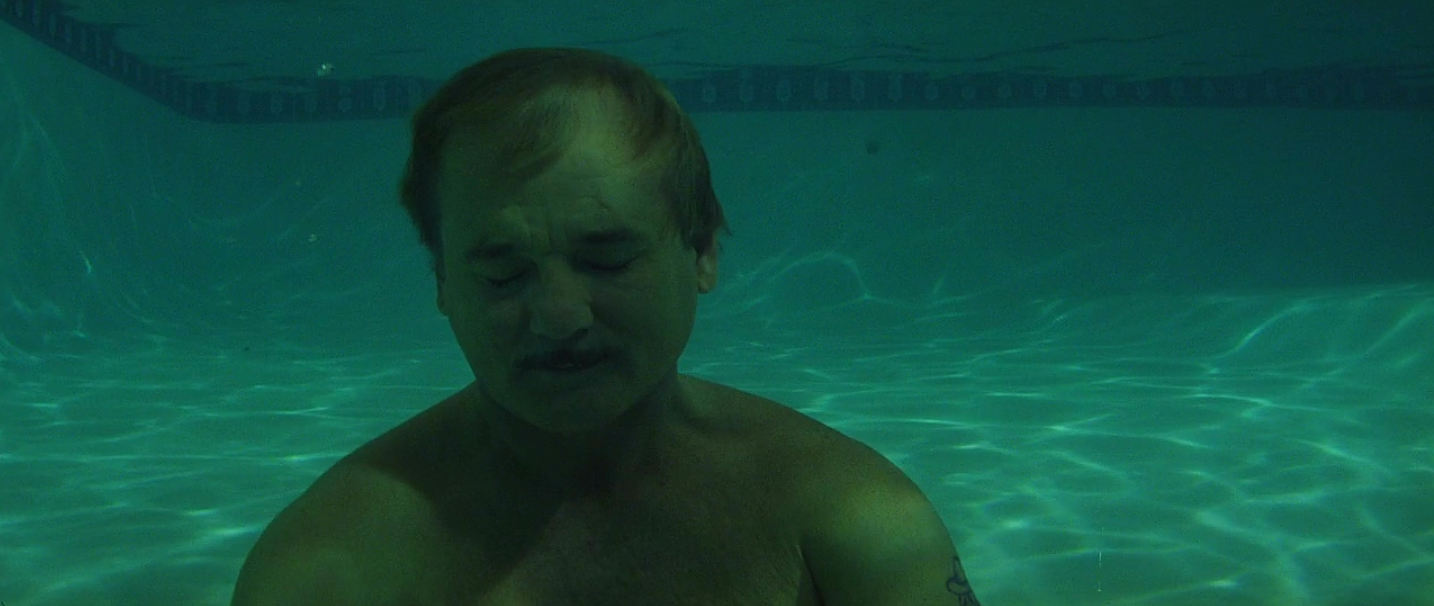
LG: Well there’s that scene at the pool party, where instead of Ben Braddock coasting in the water, we see Herman Blume sinking to the bottom of the pool. It’s a moment of great depression, and it’s a very conscious echo. We can’t really talk about Rushmore without mentioning The Graduate. There’s a very interesting way where I can see Ben Braddock as an older Max Fischer with the verve kicked out of him. And there is a similar sense of melancholy where the world is slowly breaking him. Hell, Herman Blume could be Ben Braddock twenty years later.

MO: Yeah, that great line about what happened to Ben and Elaine, “They became their parents.”

LG: Mmhmm. It’s part of what makes the friendship between Max and Blume work, they’re kind of going through a similar thing at different points in their lives. I can sort of see it in Blume’s intro, where he’s telling all of the working-class kids to take down the rich kids. There’s a bit of that rambunctiousness that he’s trying to force back into his life.

MO: There’s an intense loneliness in all three of the main characters that bands them together. Herman is losing his wife, and his kids are annoying dipshits. Max lost his mother, and he’s in a school where he’s precocious to the point where he can be off-putting, and he’s a working-class kid hiding the fact that his father (Seymour Cassel) is a barber. It’s sad, since his father is so supportive, and he relates to the “take the rich kids down” thing, but he can’t quite admit that he doesn’t come from the same stock. He wants the appearance of success at all times.

LG: That’s what I like about the bully, Magnus (Stephen McCole), a Scottish student who sees right through Max. There’s a very humanizing moment near the end where they recognize each other.

MO: Yeah. Before that, Magnus is the one person who sees that Max can be a phony and that he uses people, which Max sees as a threat (also, Magnus is kind of an asshole himself). As Max grows and starts to have more empathy for others, he sees the goodness in Magnus. They’re friends by the end!

LG: I love the way they make up. It could have been so schmaltzy, but instead Max shoots him with a BB gun, and then offers him a part in his next play. Now, we also have to talk about the third major character, Rosemary, who’s lonely in her own way. Max finds her when he reads an inscription she wrote in a book given by her old husband, Edward Appleby. She lives in his room, surrounded by his stuff. She never got over it, and Max never got over the death of his mother – he literally lives next to the cemetery where she’s buried. He cuts through it on the way to school.

MO: I feel that with Rosemary, he does fall for her, but much of it is also that he’s found someone warm and maternal as a surrogate mother. She’s so encouraging that I see it as him finding a new version of the person who supported him when he was a kid.

LG: I didn’t see that, but I see how you see it. In my mind his courtship of her is another way he’s trying to find a shortcut to adulthood by having an adult girlfriend rather than someone his own age.  He does find a girl his own age by the end, Margaret Yang (Sara Tanaka), a wonderful, bright, sweet person that he treats horribly throughout most of the movie. Part of his growing up is realizing that he could act his own age and realize that he’s still a kid to some degree.

MO: And here’s the thing – he wants to grow up, but he also wants to stay in adolescence. Blume asks him what his secret is, if he’s got it so figured out. Max’s solution is “Find something you love and do it for the rest of your life. Mine’s going to Rushmore.”

LG: And when he’s expelled for the aquarium fiasco it shatters his reality, but he tries to pretend. After enrolling in public school he should theoretically drop the prep act and stop pretending to be rich, but he doubles down. He keeps wearing the Rushmore uniform like a suit of armor, and he tries to transport his Rushmore clubs to Grover Cleveland High School (he starts a fencing team, which is inexplicably not popular). But this school won’t put up with his shit as much. Rushmore at least gave him awards for Perfect Attendance and Punctuality (which, aren’t those pretty close to being the same thing?), but this school hangs up on his phone call to Blume when he doesn’t have a phone pass.

MO: I love how he gives a speech about who he is when he arrives. He’s not exactly bullied, but they look at him like he’s this weird space alien, like, “Is this guy for real?”

LG: And when he’s led out by police later after he cuts Blume’s brakes, he’s posing like a badass and it’s moving in slow motion, and girls are like, “Him?”

MO: I love that, and no one thinks he’s a badass, no one finds him nearly that charming…except for Margaret Yang, who’s equally driven, and who’s attracted to his confidence and his ambition. I also love how the first thing that really endears Margaret to Max is that we learn she faked her science project results.

LG: There’s a bit of phoniness in both of them. They’re trying too hard for things that they might be good at, but they’re not where they want to be. I get that frustration; I look back on the stuff I wrote when I was that age and it sucks! It goes to your theory that the best he can do at this point is adapt someone else’s stuff.

MO: We both admire Max a lot, but how uncomfortable is his big scene with Luke Wilson, the doctor who Rosemary brings as a date to his play?

LG: I love the arrangement of that scene. Rosemary has to reject Max, then we go to the play, Max’s retreat from reality (with the sound of applause exaggerated to an impossible degree). And then we’re brought to the dinner with Max, Blume, Rosemary and Dr. Peter Flynn (Wilson), the most affable and mild-mannered man ever. She’s getting a little cautious, and Max is upset, because he was not invited. He gets drunk because Blume made a very wise decision to buy him a whiskey-and-soda, and it goes over about as well as you’d expect. He acts like such an adult sometimes that you can understand how an adult might forget, oh yeah, he’s an immature teenager.

MO: It speaks to how precocious teenagers are treated like adults, and then they do something that shows the adults why they can’t do that.

LG: There’s some interesting foreshadowing to Anderson’s later films, like the Jacques Cousteau book that hints at The Life Aquatic with Steve Zissou, or the subplot about the aquarium.

MO: Do we want to talk about Anderson’s use of music? We’ve talked about his use of unexpected songs from great musicians. He doesn't use The Rolling Stones’s “Satisfaction”, he uses “I Am Waiting”, this great melancholy song that perfectly soundtracks the point where everyone in the film is lonely. Cross has left Blume, Blume is stuck in a hotel without his kids or wife, Max has essentially dropped out of school, Margaret is trying to connect to Max but can’t…there’s so many shots in this montage where characters are isolated in a side of the frame to augment their loneliness, and “I Am Waiting” is perfect for it.

LG: And later on, we get “Oh Yoko” by John Lennon for when Max and Blume rekindle their friendship and start getting back in the swing of things. No one would expect you to use those John Lennon songs, but it’s so delightful and earnest for the scene. “In the middle of a shave, I call your name”, how wonderful is that?

MO: What are some of the better lines in this movie for you?

LG: “You’re like an old clipper ship captain, you’re married to the sea.” “I know, but I’ve been out to sea for a long time.”

 MO: I love the exchange when Max visits Guggeheim in the hospital after he’s had a stroke. This is the guy who was so patient with Max for so long that you can’t blame him for finally losing it, and when Max visits him out of genuine kindness, I love that he goes from being resting in a hospital to “WHADDYA WANT? IT’S FISCHER!”

LG: That scene almost doesn’t work for me, actually. It’s a good laugh, but it’s much broader than the rest of the film. I’m not complaining too much.

MO: It’s maybe a little broader, but it’s funny, so it works.

LG: The whole exchange at the end in the last scene of the film, where they explain that the Vietnam play was canceled when he tried to perform it at Rushmore. Why? “Too political?” “No, a kid got his finger blown off during rehearsals.” And the weird running gag of everyone pretending they’re getting handjobs.

MO: It’s the immaturity of the characters. It says something that Max can’t think of anything beyond that when it comes to sex. When he tries to kiss Rosemary, and Rosemary confronts him by flat-out asking what he expects with regards to sex, he’s clearly uncomfortable with it. He’s just a kid.

LG: Yeah. That’s a very hard scene to watch. It’s what separates Anderson from other comedies. He’s willing to go to dark and uncomfortable places.

MO: He never forgets that, as messed up as these people are, they’re still people. They’re worthy of dignity. The level of empathy he has for them is essential, because it’s a movie that shows growing up as learning to care about people other than yourself. Max learns to really appreciate Rosemary’s loss. He fakes being hit by a car in his last asshole act, but he realizes the profound hole her husband’s death left in her life, and how profoundly lonely Blume is.

LG: That’s an interesting scene, because it starts with him being an asshole. He’s heard that Rosemary dumped Blume, and he’s there in part to get them together again, and in part to charm her. He climbs a ladder onto her roof to get into her room and brings a mix CD with an Yves Montand song to romance her. But he realizes, “Oh, fuck, I’m a dick.”

MO: He also apologizes to Dirk and Margaret by the end, and the play, Heaven and Hell, for all of its clichés, has a remarkable effect on the characters. On one hand, the Rushmore custodian played by Kumar Pallana thinks it’s hilarious (“Best play ever, man”), but Blume who was “in the shit” during the Vietnam War, is moved by it.

LG: I love how you can tell he was there because he’s the only one who doesn’t put on the safety goggles and earplugs.

MO: The sweetness of his gestures by the end, with the dedication of the play to Rosemary’s husband along with his mother. That whole ending is sweet. He’s mended his relationship with his friends, everyone has a partner for the dance. He’s mended the relationship between Rosemary and Blume, he’s finally realized that Margaret Yang is incredible and they’re dating. There’s a friendly dance at the end between Blume and Margaret, and Rosemary and Max are left alone. There’s this great off-center framing that I think Anderson said is influenced by Demme. The shot/reverse shot shows Max and Rosemary on opposite sides of the frame, but the way it’s arranged actually shows them close together rather than far apart.

LG: I love that scene. It’s a perfect end. It’s a great teenager scene where there’s a happy ending, and he’s over her, but he’s still getting over her a little bit. But it’s going to be okay.

MO: Because he’s learned to care about other people.

LG: It’s not a trite “everything is solved” thing. It’s slightly more mature. And it’s hammered home by the use of the Faces’ “Ooh La La”, a melancholy but still upbeat retrospective on relationships.

MO: Not to mention another left-of-field song choice from Anderson, since “Ooh La La” is the one song by the Faces sung by Ron Wood rather than Rod Stewart. It’s a slightly ironic use of the song, since the lyrics are to some degree sexist, but the exuberance and the wistfulness of the song fits. And as the various couples dance in slow motion and the curtains close, we end the film smiling.

LG: I think a lot of times, great directors’ first films are a little uneven, but with Wes Anderson, he really hit a home run on the second film. This is the arrival of a major director.
MO: It’s still close to being my favorite of his, and I wouldn’t begrudge anyone who named it as their favorite. 

LOREN'S GRADE: A

MAX'S GRADE: A

Roundtable Directory:  
Bottle Rocket (short and feature)
Rushmore
The Royal Tenenbaums
The Life Aquatic with Steve Zissiou
Hotel Chevalier / Darjeeling Limited
The Fantastic Mr. Fox

Moonrise Kingdom
Shorts and Commercials
The Grand Budapest Hotel